

how to start writing a story
Most writers don't begin the novel-writing process knowing exactly how to start a story. That comes later, once the narrative arc has taken clearer form.
It's also because the opening lines of a novel carry a lot of responsibility with them. They act as an invitation for someone who's glanced at the first page of your book to either put it back down or keep reading. It's like the white rabbit showing up and asking Alice to follow him: the reader has to decide whether to follow despite not knowing what will happen next, and it is the writer's job to convince them to go down the rabbit hole.
Whether you're just figuring out how to start a novel, or revisiting Page 1 of a first draft, Reedsy Editors are here to help with tips for starting a story with literary examples from a few favorites.
Tip 1. Start with the unexpected
Gareth Watkins: Start with the unexpected. Think of the opening to Nineteen Eighty-Four, or Iain Banks', The Crow Road, "It was the day my grandmother exploded." Of course, your opening doesn't have to be as outrageous as these, but always aim for the unusual. In other words: think of how people will be expecting the book to start, then take the plot in another direction.
If you're in the mood to get some similarly twisty ideas, you can go here to see a list of 70+ plot twist examples.
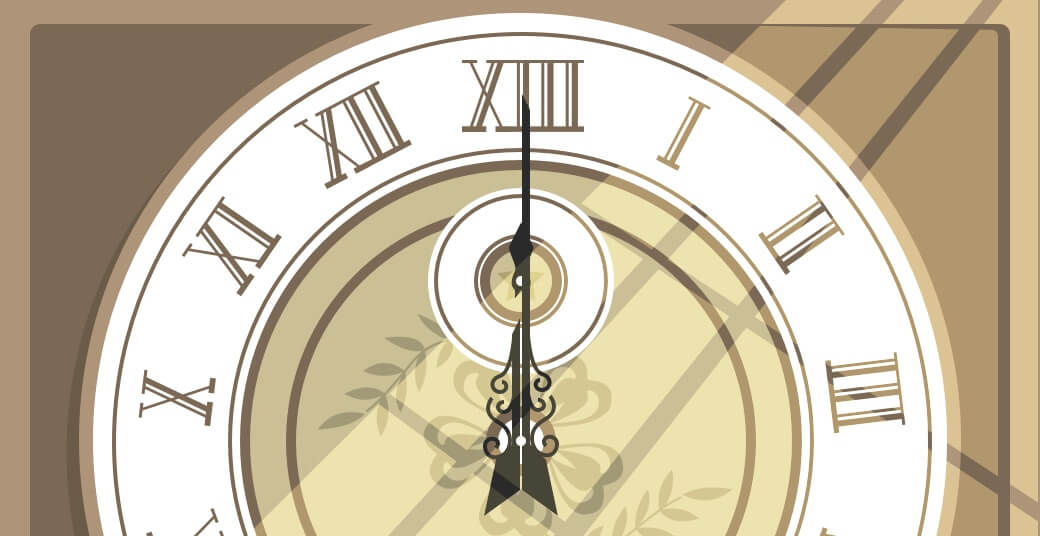
"It was a bright cold day in April, and the clocks were striking thirteen."
— George Orwell, Nineteen Eighty-Four
Tip 2. Start with an image
Harrison Demchick: Many editors will tell you to avoid exposition — the dreaded infodump — at the start of your manuscript. One of the best ways to avoid this is to begin on an image. By focusing on sensory detail right at the start — sight, sound, taste, touch, smell — and by conveying a particular, defined setting, you can absorb readers immediately within the tangible world of your novel. Context and background will come later, but a compelling image can be a fantastic hook.
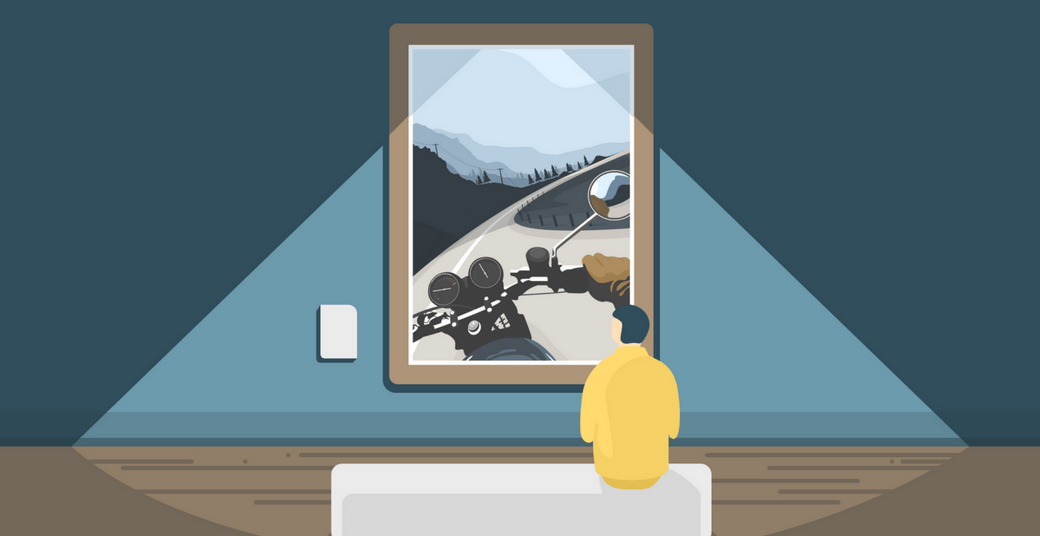
"It was a special pleasure to see things eaten, to see things blackened and changed. With the brass nozzle in his fists, with this great python spitting its venomous kerosene upon the world, the blood pounded in his head, and his hands were the hands of some amazing conductor playing all the symphonies of blazing and burning to bring down the tatters and charcoal ruins of history."
— Ray Bradbury, Fahrenheit 451
Tip 3. Start with action
Jeanette Shaw: I find novels that open in medias res (latin for "in the midst of action") to be really effective at immediately grabbing the reader and establishing stakes and tension. A classic example is Lord of the Flies, which starts with the boys on the island and then fills in the details of how they got there later. If you go this route, you need to be sure your opening action is compelling enough that the reader is prepared to wait for character setup later.
"The boy with fair hair lowered himself down the last few feet of rock and began to pick his way toward the lagoon. Though he had taken off his school sweater and trailed it now from one hand, his grey shirt stuck to him and his hair was plastered to his forehead."
— William Golding, Lord of the Flies
PRO-TIP: Want to find out which famous author you write like? Take our 1-minute quiz below!
🖊️
Which famous author do you write like?
Find out which literary luminary is your stylistic soulmate. Takes one minute!
Tip 4. Start with brevity
Fran Lebowitz: I'd say start with something sparse that flicks on our curiosity, above all.
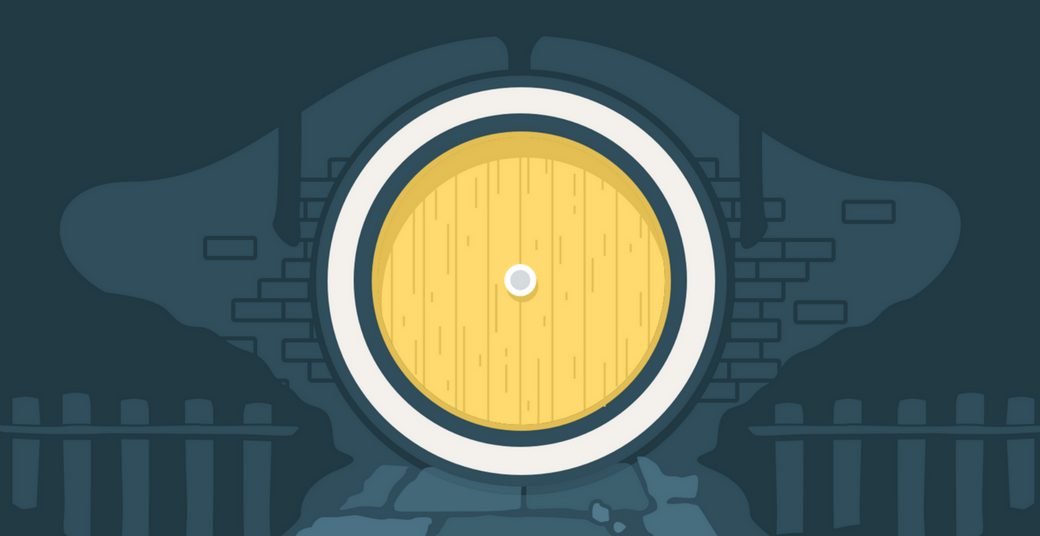
"In a hole in the ground there lived a hobbit."
— J.R.R. Tolkien, The Hobbit
Free course: How to write a novel
Learn the fundamentals of novel-craft with Reedsy's most popular online course. Get started now.
Tip 5. Start with a question
Nathan Connolly: The reader should be looking for an answer. The opening to your novel should be a question that can only be answered by reading on. This doesn't need to be literal, or overt, it can even be poetic, or abstract, but there must be a wound that can only be healed by reading on.

"It was a queer, sultry summer, the summer they electrocuted the Rosenbergs, and I didn't know what I was doing in New York."
— Sylvia Plath, The Bell Jar

Write. Edit. Format. All for free.
Sign up to use Reedsy's acclaimed book-writing app for free
Learn how Reedsy can help you craft a beautiful book.
Tip 6. Start by appealing to curiosity
Britanie Wilson: There are many ways to start a novel, but in my experience, the most successful beginnings have the magnetic effect of appealing to an emotion that all readers possess: curiosity. Make them immediately ask of your characters: What is this place? Why are they here? What are they doing? Who is involved? Where is this going? If you can pique your readers' curiosity from the very first sentence, you can will them to keep reading before they even know they like your book.
![Story - Curiousity]()
"Royal Beating. That was Flo's promise. You are going to get one Royal Beating."
— Alice Munro, Who Do You Think You Are?

At the same time, it's important that the start of your book isn't entirely cryptic. Your opening must sustain your readers' interest in some way if you are to keep them reading through to chapter two, and reveal more and more information in the plot points to come.
Pro tip: Starting your writing with dialogue is considered a no-no by some, but can actually be a great way of achieving this effect.
Tip 7. Start with an understanding of your fictional world
Meghan Pinson: What draws me into a literary novel is the sense that the author has a deep knowledge of everything they're writing about. If the first page conveys a mastery of place, time, and language, I can trust the novel is borne of good research, and I'll relax into the story. But if the details feel off, or are absent or vague, I won't read on.
I think compelling writing is a result of specific language married to intimate insights or experience, and that literary fiction has a sense of gravity that's informed by deep history. The best novels never make us doubt that every sentence was weighed for truth and beauty against the world and the author's understanding. Literary fiction, in my mind, is at least as true as real life, and just as tough to get right.

"The madness of an autumn prairie cold front coming through. You could feel it: something terrible was going to happen. The sun low in the sky, a minor light, a cooling star. Gust after gust of disorder. Trees restless, temperatures falling, the whole northern religion of things coming to an end. No children in the yards here. Shadows lengthened on yellowing zoysia. Red oaks and pin oaks and swamp white oaks rained acorns on houses with no mortgage. Storm windows shuddered in the empty bedrooms. And the drone and hiccup of a clothes dryer, the nasal contention of a leaf blower, the ripening of local apples in a paper bag, the smell of the gasoline with which Alfred Lambert had cleaned the paintbrush from his morning painting of the wicker love seat."
— Jonathan Franzen, The Corrections
Tip 8. Start with something new
Thalia Suzuma:
Consider these two lines:
1) "I'm sitting writing this at my desk."
2) "I write this sitting in the kitchen sink."
Which line makes you want to read on? I'd hazard a guess that it's probably the sentence about being perched at a sink — the opening line to one of my favorite novels, I Capture the Castle by Dodie Smith. Say something in your first few sentences that hasn't often been said before! A brief line that is laden with foreboding and heavy with what has not been said often works well, too.
"There was no possibility of taking a walk that day."
— Charlotte Brontë, Jane Eyre
Tip 9. Start with intensity
Rebecca Faith Heyman: Openings should be intense, but that doesn't necessarily mean "loud" or "explosive." So many authors are keen to start with a literal bang — something going up in flames, or a car accident, or some other catastrophe. But recall that even a smoldering fire can burn your hand; draw us in like moths to the flame, but don't let the bonfire rage so fierce we can't get close.
"At dusk they pour from the sky. They blow across the ramparts, turn cartwheels over rooftops, flutter into the ravines between houses. Entire streets swirl with them, flashing white against the cobbles. Urgent message to the inhabitants of this town, they say. Depart immediately to open country."
— Anthony Doerr, All The Light We Cannot See
Tip 10. Start with your heart
Diane Sheya Higgins: Ensure readers that you are not kidding around. You have invested blood, sweat, and tears into this story, and the opening lines should prove that. Compose the first lines of your book as though they were the last lines you will ever write.
When readers are transported into your far reaching insights and soulful explorations, they are yours. Every time I read the opening lines of Hugh Howey's bestselling self-published novel, Wool, I am drawn into the breathtaking depths of his vision and humanity, and I wrench my heart from my chest, and say, "Here, take it."
"The children were playing while Holston climbed to his death; he could hear them squealing as only happy children do. While they thundered about frantically above, Holston took his time, each step methodical and ponderous, as he wound his way around and around the spiral staircase, old boots ringing out on metal treads."
— Hugh Howey, Wool
Tip 11. Start by placing a spell on your reader
Anne McPeak: You want your reader to be swept up in the story— for its entirety, but especially at the beginning. This is your chance to intoxicate your reader and convince them that they can't not read on. This doesn't mean your story needs drama, or fireworks, or shocking material; what your story really needs is close attention to language, tone, and pacing. Dazzle your reader from the start, and they will willingly take your hand for the ride.
"Like a match struck in a darkened room:
Two white girls in flannel nightgowns and red vinyl roller skates with white laces, tracing tentative circles on a cracked blue slate sidewalk at seven o'clock on an evening in July.
The girls murmured rhymes, were murmured rhymes, their gauzy, sky-pink hair streaming like it had never once been cut."
— Jonathan Lethem, Fortress of Solitude
Establishing best practices for starting a story can be tricky because, as Reedsy Editor Nathan Connolly says, "Fiction should, by nature, seek to defy, redefine or expand beyond rules." It should not be an author's goal to emulate the words or tastes of another person while writing a novel.
However, many well-loved novels share a thread of commonality when it comes to their first few lines — such as a question, a brief to-the-point line, or in the middle of action. While there's no hard rule for what works, these are guidelines you can follow when determining how to hook readers down your story's path.
Writing a book is a monumental task, but very doable once you have momentum and a compliant muse! And now, a few final resources for you:
- If you've started your story successfully but aren't sure where to go from here, check out this comprehensive post on how to write a story!
- Having the opposite problem — don't know how to conclude your novel? Try our post on how to end a story.
- And when you're ready to publish, go ahead and read our technical article on formatting and preparing a book for publishing. Best of luck!
how to start writing a story
Source: https://blog.reedsy.com/how-to-start-a-story/
Posted by: sabalagole1969.blogspot.com
0 Response to "how to start writing a story"
Post a Comment