

When Humanism Spread And Affected Literature, Authors And Dramatists Began Writing About
The term "Renaissance" derives from Latin "renascentia" and means "rebirth". It was used to indicate the flowering of the arts and sciences and the changes in religious and philosophical thought.The historical event which gave origin to European Humanism and then to Renaissance was the fall of Constantinople in 1453.
 Greek scholars scattered all through Europe, particularly through Italy, bringing with them the manuscripts of classical antiquity. In Italy Humanism and Renaissance occupy the 15th and the 16th centuries. English Renaissance developed later than in the other European countries at the end of the 15th century. This was due mainly to the country's internal problems with the Wars of the Roses. It occupied the whole 16th century and part of the 17th up to the closure of the theatres in 1642.English Renaissance saw the renaissance of English literature especially in the fields of poetry and drama. It flourished in the second half of the 16th century. It is also called the Golden Age of English literature, the Elizabethan Age or the Age of Shakespeare. It may be divided into shorter periods: Humanism (early Renaissance), Elizabethan Age (high Renaissance) and Jacobean Age (Late Renaissance).
The 16th century was marked by great changes and events: the discovery of new lands, the circumnavigation of the world, the Copernican Revolution (the sun is at the centre of the universe; it is the earth and the other planets that orbit around it and not vice versa as said in the theory of Ptolemy), the changes in the planetary astronomy, the achievements of Galileo Galilei, the rebirth of classical literature of Greece and Rome. The spread of learning was greatly favoured by the use of the printing press with movable type which had been invented by Gutenberg in Germany and introduced into England by Caxton in 1476. Books became less expensive and consequently literacy was within the reach of more and more people.Lutheran ideas began to spread over Europe. Martin Luther, a German monk, challenged the doctrine of the Church of Rome and the authority of the Pope. He denounced the selling of indulgences, the real presence of Christ in the Eucharist and sacraments in general. He gave much importance to the individual relation between man and God. His followers preached against the wealth of Abbots, the worship of images and relics and the abuses and corruption of the clergy. On the whole it was an Age of growing wealth and prosperity in the rich families but also of poverty in the lower classes.
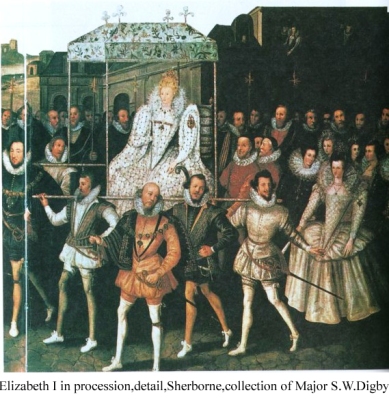
English Renaissance was characterised by intense national feeling and national pride under the influence of the personality of Queen Elizabeth. Thanks to her learning reached a great intensity. She was a really cultured woman fond of music and theatre. She understood Latin and Greek and spoke several languages. She was able to play musical instruments, sing and dance. The Queen herself wrote lyrics and epigrams and translated classical works. Her people adored her and artists often dedicated their creation to her. She filled her Court with man qualified in every branch of human activity. A characteristic figure of the English Renaissance was the courtier , an ideal complete man good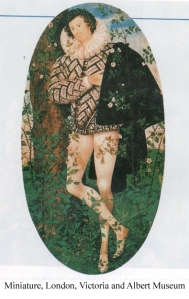 at everything. He was usually a nobleman who possessed both physical and intellectual qualities. He was polite, could speak well, knew the classical and foreign languages, was able to compose poetry and music, sang well, played some musical instrument, and was valiant in the use of arms. These qualities correspond to Renaissance qualities of the complete man but it is obvious that a single person could not possess all of them . The all-round man was modelled on "Il Cortegiano" by Baldassarre Castiglione (published in England as The Courtier) and on "Galateo" by Monsignor Della Casa.
Italian culture was very important and affected English Renaissance in many things from literary theories to fashion and clothes. It could be seen in the life at Court where Italian ways and costumes were emulated. Italian poets and novelists were sources of much narrative material. Great Italian men, such as Leonardo da Vinci and Niccolò Machiavelli had a considerable influence on the Elizabethans. Leonardo was appreciated because he was seen as an "all-round man" being master of many arts and fields of learning. Machiavelli's The Prince had a strong influence on the politics. The idea that " the ends justify the means " is present in many characters of Marlowe's and Shakespeare's plays. But Italy was also seen as the seat of vice and corruption and while her arts and learning were imitated, her customs and practices were rejected. Stories of atrocious crimes were set in Italy and attributed to Italian characters. Roger Ascham in The Schoolmaster warned English people who went to Italy because they might run the risk of being changed into corrupted man: " Inglese italianato, diavolo incarnato " that is " You remain men in shape and fashion but become devils in life and condition ". He also defined an Englishman Italianate: " he that by living and travelling in Italy bringeth home into England out of Italy the religion, the learning, the policy, the experience, the manners of Italy ".
HUMANISM: The term "Humanism" derives from the study of Humanae Litterae, (grammar, rhetoric, logic, poetry and philosophy) based on the ancient civilization of Greece and Rome, opposed to the Divinae litterae (the study of old theology and sacred writings). In a historical and literary sense, Humanism is part of the wider movement of the Renaissance. It disrupted the principles of the Middle Ages: the attention was focused no longer on God but on man explored as an individual who could shape his own destiny. In its first phase it was didactic and educational. It started in Italy at the end of the 14th century under the impulse of schools and academies for the study of Latin and Greek classical authors and then it soon spread all over Europe. In England it flourished under the impulse of some scholars who had studied in Italy (Thomas Linacre and William Grocyn introduced the teaching of Greek at Oxford University). The most important English humanists were John Colet,Erasmus Desiderius, Sir Thomas More and Francis Bacon. John Colet, Dean of Saint Paul Cathedral, studied in Italy and France and brought back to England the culture of the two countries. In 1509 he founded Saint Paul's School, where classical authors and principles of rhetoric were taught. The programme included the memorizing of passages in Latin and Greek and the translating from these languages into English and vice versa. By 1520 the flowering of Humanism was being checked by the religious struggles of the Reformation.
PROSE: The prose of the Renaissance did not have the great impact that poetry and above all Drama had. There were many translations especially from Italian sources (Il Cortegiano, Il Galateo) because they expressed the new ideas of the courtier and of the gentleman. A translation which had an important influence on English language and literature was the translation of the Bible from Greek and Hebrew into English in 1611. It is known as the Authorized Version or King James's Bible (King James had appointed a group of scholars to work on a Book which had to be the basis of the Protestant interpretation of Christianity). A lot of prose-works were written in Latin. The most important prose writers were: Erasmus of Rotterdam, Thomas More and Francis Bacon. Erasmus was Dutch but he is considered an English humanist because he spent a long time in England. He taught Greek at the Universities of Oxford and Cambridge. His main interests were The New Testament and the classics. In 1516 he published a new Latin version of the Greek Bible and encouraged the spread of the teaching of Latin throughout Europe. Erasmus questioned the authority of Rome in the interpretation of the Scriptures and attacked the corruption of the Papacy. His best known book is Praise of Folly, a satire on the elements of superstition in religion and ritualism. It was written in Latin and then translated into English. Sir Thomas More was a great friend of Erasmus (Erasmus dedicated his Praise of Folly to him). He was deeply religious and active both in church affairs and in politics( he was appointed Lord Chancellor,the highest political office in England). His book Utopia is written in Latin. More's targets were the evils of his contemporary social and political situation ironically compared to the ideal society of the imaginary island of Utopia. In this land the welfare of the citizens was the main concern, war was detested and justified only for defence, all religious creeds were tolerated, private property was discouraged in favour of communal property, every citizen worked no more than six hours a day, the Sovereign was chosen by the people and could be deposed if he behaved as a tyrant, luxury was despised, man and women had the same right to education, laws were simple-written, hunting was abolished. Bacon wrote essays on many subjects. He contributed to the advance of scientific knowledge. His most famous works were a tract on education, TheAdvancement of Learning, and The New Atlantis. In The Advancement of Learning he asserted that the knowledge was to beachieved not through deduction from principles which could not be proved, but through induction, that is through observation and experiments moving from the particular to the general. In The New Atlantis he expressed the importance of scientific studies for the progress of the world. Other prose writers were Sydney (Arcadia) John Lyly (Euphues or The Anatomy of Wit – it dealt with education, philosophy and social customs), Robert Greene and Thomas Lodge.
DRAMA: Drama was the greatest achievement of the Elizabethan Age. It reached the vast popular audience at all levels of society. All the writers of the time, except Sidney and Spenser, wrote a lot of plays. Among them, the most famous were William Shakespeare , Christopher Marlowe and Ben Jonson. Ben Jonson created a lot of masques. A masque was a form of courtly entertainment that combined poetic drama, song, dance and music. The plot was simple. At the end the audience danced with the actors. Gorboduc or The Tragedy of Ferrex and Porrex by Sackville and Norton, may be considered the first regular tragedy. Written in blank verse and modelled on Seneca, it anticipated the great blood tragedies of Elizabethan drama. Terence and Plautus were the models for comedy and Seneca for tragedy. Their influence can be seen in some important traits of the Elizabethan plays: the theme of vengeance, the omnipotence of destiny, the supernatural (ghosts and premonitory dreams), the cruel tyrant, the presence of monologues or soliloquies. Seneca's tragedies, usually characterised by atrocities, crimes and bloody actions, appealed to the Elizabethans who were used to violence and bloodshed (the Golden Age witnessed cruelty in the religious persecutions, in the witch hunts and in the repression of political plots).At first the plays were performed in great halls or in inn-yards where the companies of travelling actors stopped. Each company had its own dramatist and the plays were the property of each of them. There was no copyright (the plays were not published) and there were illegal versions written shorthand during the performances. The public companies of players were not officially recognizes during Queen Elizabeth's reign. To avoid the laws against vagabonds, they placed themselves under the protection of a powerful patron or built their own theatre. They were very popular and helped thefoundation of a national theatre.
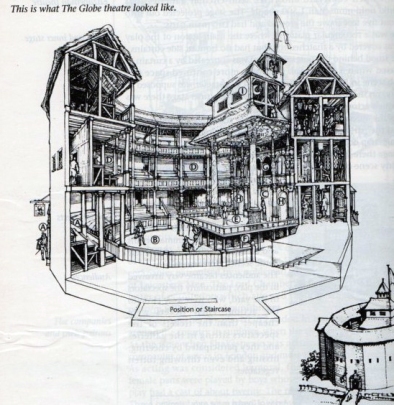 The first real theatre, called The Theatre, was built near London by James Burbage in 1576. It was soon followed by The Rose, The Swan and The Globe. They were circular, octagonal or square and had no roofs. The stage was bare; it had no scenery, no curtain and no artificial lighting so plays had to be performed in day-light. The dialogue was the most important part of the play. The actor was very important because it rested entirely with him to create the dramatic tension. There were no actress and the parts of women were performed by boys. The admission prices were low. The audience was a great mix going from the poorest and uneducated classes (it was not unusual that they threw rotten vegetables at the actors, moved around, drank and ate during the performances), to the Middle and highest classes. As a consequence the dramatist had to write so as to appeal at the same time to the learned gentlemen and to the illiterate.
Apart from the most popular theatrical companies (The Lord Chamberlain's Men, The Admiral's Men) there was also another group of dramatists: The University Wits. They had been educated at the Universities of Oxford or Cambridge. The group included John Lyly, George Peele, Robert Greene as concerns comedy and Thomas Kid (his Spanish Tragedy was the first "revenge play") and Christopher Marlowe as concerns tragedy. Lyly, Peele and Greene were fond of heroic and tragic themes, long speeches and powerful declamations and wrote for the Queen and her court. Kid and Marlowe,instead, wrote for a wider public than the refined courtly audience. Marlowe was the greatest of them all. His plays represent the dividing point between the late medieval drama and the Elizabethan drama and opened the way for Jonson, Shakespeare and the other Elizabethan dramatists. Another famous playwright was Ben Jonson. He lived and worked both under the close of the Elizabethan era and during the reign of James I. He was at his best with comedy in which he satirized human defects and weaknesses. His comedy Everyman in His Humour was the first example of the comedy of humours. The term "humour" refers to the four humours present in the human body (phlegm, blood, yellow bile/choler and black bile) which determine man's personality. According to the predominance of one of them a man could be phlegmatic, sanguine, choleric or melancholic ( in the Middle Age physicians believed that the particular character of an individual was determined by the combination of the fluids of the body with the four elements of the Universe (earth, air, fire and water). The great period of the English drama came to an end in the second half of the 17th century. The Puritans regarded the stage as a school of immorality and vice.In 1642 public performances of stage plays were forbidden and the theatres were closed.
POETRY: The Elizabethan Age is considered the "Golden Age" of the English drama but Poetry was held in high consideration, too. Renaissance poetry is mostly identified with the sonnet but there were other popular types of poetry such as the songs and madrigals (after the Italian name), pastoral poetry, patriotic poetry, religious poetry, satirical and mocking poetry and erotic poetry. Songs and madrigals were popular both in towns and in the country. They could be sung without instrumental accompaniment (songs) or accompanied by the lute and other instruments (madrigals). They dealt manly with pastoral and love themes. Some of them were traditional English airs while others were translated from abroad, especially from Italy. Pastorals dealt with nature seen as a consoling element and a shelter. Spencer's pastoral poetry was the source of inspiration for many poets. Patriotic poetry was inspired by the nationalistic spirit which marked the English Renaissance. It dealt with poems on the monarchy, historical events and religion. Religious poetry originated by the reaction of the moralists of the time who were scandalized by the lasciviousness and licentiousness of some poems. Satirical poetry was also very popular. It was the answerer to the courtly sonnet and attacked the costume of the time mocking the courtier.
THE SONNET: The term "sonnet" derives from the Italian "sonetto". It is a short poem of fourteen lines expressing personal feelings and emotions. Among the Italian sonneteers, the most famous were Petrarch and Dante. They provided the literary genre of the Cycles of Sonnets and the various themes, such as love, friendship, beauty, the destructive effect of time and the desire for women. The sonnets were collected in "Canzonieri" like Petrarch's. They described the love affair of a poet with a lady he loved. Often the lady the poets love was very beautiful but very cruel, too. Petrarch perfected the sonnet and established it as a major poetic form. His Canzoniere deals with his love for Laura, a beautiful married woman who disdained his love for her. It is not only a love collection but it also deals with meditations on politics, religion and faith. The Petrarchan sonnet, also called the Italian sonnet, is made up of fourteen lines divided into an octave (or two quatrains) and a sestet (or two tercets) usually rhyming ABBA ABBA CDC DCD (or CDE CDE). The octave introduces a theme, a problem or a particular situation and the sestet provides a resolution, a comment on the situation or the personal feelings of the poet. Elizabethan sonnets modified this form and divided the four lines into three quatrains and a final rhyming couplet. The final couplet might be a summing up of the theme previously dealt in the quatrains or a reflection on it. Important sonneteers who wrote collections of love sonnets were: Sir Philip Sidney, Edmund Spenser and William Shakespeare. After 1600 enthusiasm for the sonnet declined.
The sonnet was introduced from Italy by Sir Thomas Wyatt and Henry Howard, Earl of Surrey. Wyatt sonnet was based on the Petrarchan model. To adapt the Italian pattern to the English language he left the octave unchanged and modified only the sestet dividing it into a quatrain and a final couplet. The Earl of Surrey modified the structure, three quatrains and a final rhyming couplet, and used a new rhyming scheme with different rhymes. The final pattern of the Elizabethan sonnet is three quatrains and a final couple of verses rhyming ABAB CDCD EFEF GG. Elizabethan sonneteers often develop a theme in the three quatrains and use the final couplet to summarise or deny it, to give an answer or propose a solution. The Earl of Surrey is also remembered for another innovation following the example of the Italian " endecasillabo sciolto": the use of blank, (or unrhymed) verse in his translation of Virgil's Aeneid. The development of the Sonnet was influenced by Sidney's Astrophel and Stella . It is one of the first sonnet sequences in English literature. The poet tells his love story with Stella, a married noblewoman he loved. She did not reciprocate his love. The sonnets are modelled on the Italian pattern of an octave and a sestet but the rhyming scheme is different: ABAB ABAB CD CD EE. Astrophel is the poet and Stella is probably Penelope Devereux. Spenser wrote Amoretti, a sequence of sonnets written to celebrate his love for Elizabeth Boyle, a lady who at first rejects him and makes him suffer and eventually accepts his love and marries him. The most beautiful sonnets are the ones dealing with episodes of his long courtship. Spencer's canzoniere is different from most of the sonnet sequences of his time because it also deals with common topics such as the passing of time and the eternal quality of poetry: everything on earth decays and dies; only the written words survive. His sonnets follow the traditional English sonnet: three quatrains and a final rhyming couple of verse. His masterpiece was The Faerie Queene. It is unfinished because of the planned twelve books, only six and fragments of the seventh are extant. It is an epic allegory in which twelve knights search for the Fairy Queen. The Fairy Queen was Queen Elizabeth. In the poem she appears as Gloriana or in other female characters. She held a festival that had to last twelve days. On each day the knights accomplished some gallant deeds representing one of the twelve virtues that make a perfect gentleman. King Arthur, depicted as the ideal Renaissance gentleman, summed up all of them. Spenser adopted Ariosto's ottava rima and modified it by adding a ninth line. The stanza is known as the Spenserian stanza, a nine-line stanza rhyming ABABBCBCC.
After Sidney and Spencer poetry played a minor role in literature. In the late Renaissance, however, we meet three great poets: Ben Jonson, John Donne and above all John Milton (John Milton). During the Puritan Age the poets were grouped into "Cavalier Poets" and "Metaphysical poets". Jonson and Donne were the leaders of the two groups.The followers of Jonson, known as the "Tribe of Ben", were also called "Cavaliers" because they were on the side of royalists. Among them we can mention Robert Herrick. They preferred secular themes such as love and beauty, and exalted women as the main source of inspiration. They were in favour of a carpe diem philosophy of life: aware of the brevity of life, they invited man to enjoy what life offered. The followers of Donne, known as "Metaphysical Poets", were on the side of Parliamentarians and wrote on religious and on sensual themes. Their poems often dealt with difficult arguments and contained elaborate sentences rich in symbols, metaphors, similes and paradox. The most famous poets in this group were John Donne and George Hebert. A poet of the time, who belonged neither to the Cavaliers nor to the Metaphysical, wasAndrew Marvell. He combined the qualities of the two groups.
When Humanism Spread And Affected Literature, Authors And Dramatists Began Writing About
Source: https://rosariomariocapalbo.wordpress.com/2018/03/21/english-humanism-and-renaissanceprose-poetry-drama/
Posted by: sabalagole1969.blogspot.com
0 Response to "When Humanism Spread And Affected Literature, Authors And Dramatists Began Writing About"
Post a Comment