

How Many Stages Do Female Animals Experience During Parturition?
Parturition is the process of delivery of the fully grown fetus on the completion of the normal pregnancy menstruum. Parturition is an interesting biological process in the sense that the uterus that was quiescent during the entire pregnancy starts contracting and the cervix that was tightly contracted relax sufficiently to allow the passage of the immature i to the globe outside the mother'south womb, passing through the birth canal (which is formed past the uterus, cervix and vagina inside the pelvic bones and their attachments). Parturition is one of the near important events for the farmers every bit by this deed of his animal he would derive gain in terms of milk or auction of animal and its progeny. Nearly domestic animals are prone to maximum injuries and infections, some of them endangering the life of the fetus and the dam immediately, and some of them affecting the future productive and reproductive life of the mother. Therefore, due intendance must be exercised in advance and sufficient vigilance must exist kept during parturition to minimize parturient problems. Biochemical connective tissue changes in the uterine cervix appear to precede uterine contractions and cervical dilation, and all of these events commonly occur before rupture of the fetal membranes.
Key words
Labor, Parturition, domestic animal, hormones
Introduction
Labor is characterized by an increment in myometrial activity or, more than precisely, a change in the myometrial contractility pattern from "contractures"(long-lasting, low frequency activity) to contractions" (high intensity, high frequency activity) [xiv], resulting in effacement and dilatation of the uterine cervix. In other words, Parturition is the process of delivery of the fully-grown fetus on the completion of the normal pregnancy catamenia. Parturition is an interesting biological procedure in the sense that the uterus that was quiescent during the entire pregnancy starts contracting and the cervix that was tightly contracted relax sufficiently to allow the passage of the young one to the world outside the mother'south womb, passing through the nascence culvert (which Is formed by the uterus, neck and vagina within the pelvic bones and their attachments). Pre parturient Care of the female parent throughout the gestation and especially during the last role, the diet of the significant animals is important. Feeding of animals should be oriented in such a fashion that the prepartum or parturient incidence of some of the ordinarily occurring metabolic disorders is minimized, a healthy feasible progeny is produced and the milk production of the dairy type animals is optimum. It is beyond the scope of this book to discuss all of these strategies in detail. In dairy cattle, farmers often feed their meaning cows with concentrates only during the last few days of pregnancy and ofttimes vegetable oil is added to the concentrates. Although growth of the fetus occurs maximally during the concluding part of gestation, however, the value of such oil feeding is non beyond incertitude. Recent suggestions for feeding of pregnant dry cows include the feeding of high-cobweb low-energy chopped straw [thirteen,15] and the feeding of anionic salts in combination with acceptable calcium and magnesium [iv] and brake of rumen degradable poly peptide [xiv]. Extra energy feed is required for sheep and goats that take been diagnosed to exist carrying twins. The feeding of the bitch should be aimed at increasing the energy intake during the terminal four weeks of pregnancy and 1.0 –1.8% calcium and 0.viii-1.six% of phosphorous should be included in the diet of late pregnant bitches [1]. Vaccination of significant animals for the prevention of some infectious diseases has been mentioned previously, however, these vaccinations depend on whether or not, the disease is prevalent and the species-specific requirement. Pregnant mares however, need to exist essentially given tetanus antitoxin or tetanus toxoid during gestation and immediately subsequently foaling. Special attending need to be fastened to the hygiene at the time of parturition and as such, animals must be shifted to hygienic parturition stalls and this would besides prevent overcrowding.
Signs of approaching parturition
Some externally visible changes exercise occur in animals when parturition is approaching. The nigh important external changes of approaching parturition are seen in the udder, vulva and pelvic ligaments and to some extent in the behavior. The symptoms are inconsistent between individual animals, and between consecutive parturitions. The symptoms therefore, do not allow an accurate prediction equally to the exact time of parturition in a certain animal but are only useful indications equally to the approximate time parturition can be expected. Clinicians must therefore refrain from as well positive statements concerning the exact time of parturition.
Physiological phases of myometrial activeness
The regulation of uterine activeness during pregnancy can exist divided into iv singled-out physiologic phases [5,6]: Stage 0: inhibitors active during pregnancy the uterus is maintained in a state of functional quiescence through the action of various putative inhibitors including, just not limited to:
- Progesterone
- Prostacyclin (prostaglandin I-ii)
- Relaxin
- Parathyroid hormone-related peptide Nitric oxide
- Calcitonin gene-related peptide
- Adrenomedullin
- Vasoactive abdominal peptide.
Stage 1: myometrial activation every bit term approaches the uterus becomes activated in response to uterotropins, such as estrogen. This stage is characterized by increased expression of a series of contraction-associated proteins (CAPs) (including myometrial receptors for prostaglandins and oxytocin), activation of specific ion channels, and an increase in connexin-43 (a primal component of gap junctions). An increment in gap junction formation between adjacent myometrial cells leads to electric synchrony within the myometrium and allows for effective coordination of contractions.
Phase 2: stimulatory phase Following activation, the "primed" uterus can exist stimulated to contract past the action of uterotonic agonists, such as the stimulatory prostaglandins E2 and F2 blastoff and oxytocin.
Stage 3: involution Involution of the uterus after delivery occurs during phase 3 and is mediated primarily past oxytocin.
Closure of the ductus arteriosus.
Closure of the foramen ovale within a few hours ofbirth in foal. Prepartum signals for parturition initiation the initiation of parturition in most domestic animals continues to be only partially understood. It is fascinating that on completion of events necessary to render a immature one capable of independent life outside the mother's uterus, closely coordinated changes occur in the fetus and mother resulting into delivery of the fetus past the human activity of parturition. Maybe the initial mechanism for the timing of birth is encoded in the fetal genome and is closely linked to, and activated when certain prerequisite developmental events have occurred in the fetus [5]. The possible factors that help in initiation and the deed of parturition include physical, biochemical and neuro endocrine (Tabular array 1) factors.
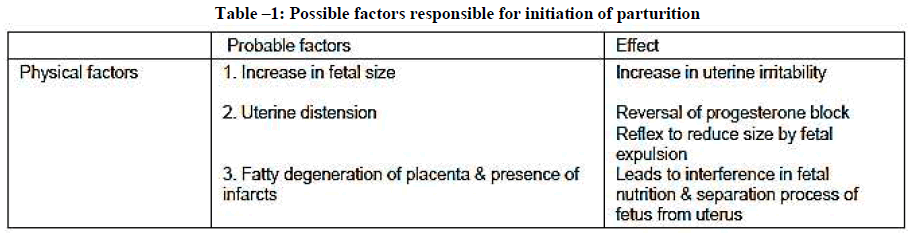
Table i: Possible factors responsible for initiation of parturition
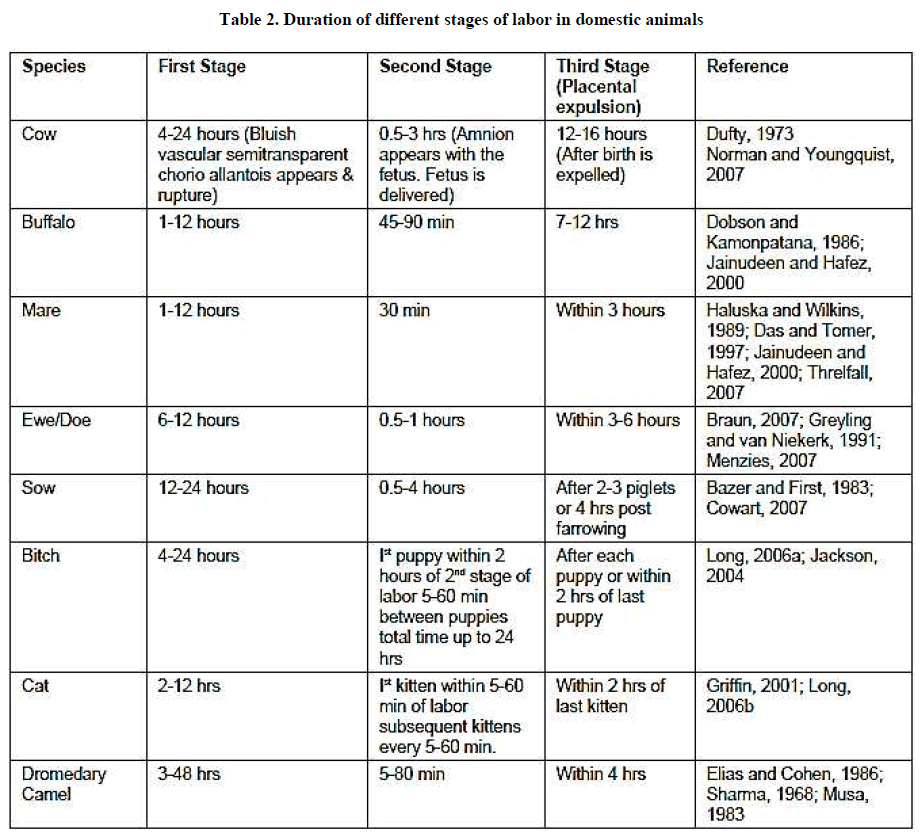
Table 2: Duration of dissimilar stages of labor in domestic animals
It is considered that in most species the fetus exerts a control over the length of gestation whereas, the mother can influence the time of nativity within the narrow limits [6]. The fetal pituitary adrenal axis is known to initiate the prepartum events by which signals to the placenta trigger the maternal hormonal changes which allow normal labor to proceed at least in the ruminants and to some extent in the sus scrofa [15, 16]. The function of fetus and the nature of its signals to the female parent for maternal changes are still unknown in the equus caballus [fifteen] and the canis familiaris [3, 4, 8]. The uterus remains quiescent during pregnancy in about domestic animals by a combined action of luteal and / or placental progesterone and molecules like relaxin, nitric oxide, prostacyclin and catecholamine's [eight]. This is transformed into an oscillatory organ with cervical relaxation virtually parturition. Many biochemical, hormonal and molecular changes precede parturition. The universality of the fetal glucocorticoid surge (sudden rise in levels) preceding normal labor at term suggests that it may represent a key signal common to all species [fourteen].
Hormones Involved in the Parturition
Prostaglandins
Prostaglandins are predominantly paracrine/autocrine hormones (i.eastward., they human activity locally at their site of production on contiguous cells). An increment in uterine prostaglandin biosynthesis is a consequent element in the transition into labor [vii], and is probably common to all species [8].
Progesterone
Administration of a progesterone receptor antagonist or removal of the readily induces abortion in early pregnancy (earlier 7 weeks of gestation), corpus luteum [suggesting that progesterone is necessary for early pregnancy maintenance. Administration of exogenous progesterone after early lutectomy prevents ballgame, further supporting the hypothesis that ovarian progesterone production is essential in maintenance of early pregnancy. Placental progesterone product becomes important between 7 and 9 weeks, and the placenta is the ascendant source of progesterone thereafter. However, the function of progesterone in belatedly pregnancy is not too defined.
Estrogen
The placenta is the main source of estrogen biosynthesis during pregnancy. Estrogens exercise non themselves cause myometrial contractions, and maternal administration of estradiol to rhesus macaques from 130 days of gestation has no effect on length of pregnancy [11]. Instead, estrogens human activity by up regulating myometrial gap junctions [four] and uterotonic receptors (including L-blazon calcium channels and oxytocin receptors) [2], thereby enhancing the capacity of the myometrium to generate contractions.
PGF 2alpha
Enhances myometrial contractions, induces luteolysis and the release/secretion of relaxin.
Oxytocin
Oxytocin is a peptide hormone synthesized in the hypothalamus and released from the posterior pituitary in a pulsatile fashion. Its biologic half-life is approximately three to four minutes, but appears shorter when higher doses are infused. Oxytocin is inactivated in the liver and kidney, although during pregnancy it is primarily degraded by placental oxytocinase. Oxytocin is the near potent endogenous uterotonic agent, and is capable of stimulating uterine contractions at intravenous infusion rates of 1 to ii mU/min at term [16,3]. The frequency and aamplitude of oxytocin-induced uterine contractions are identical to those occurring during spontaneous labor.
Glucocorticoids
These hormones have several actions that can also help prepare the uterus for labor. Glucocorticoids act directly to up regulate prostaglandin product in fetal membranes at term[6,13]. Cortisol appears to stimulate expression of placental (merely not hypothalamic) CRH in vitro [10]. In addition, cortisol enhances amnionic cyclooxygenase to raise prostaglandin synthesis and inhibits chorionic prostaglandin dehydrogenase activity, thereby preventing prostaglandin metabolism [half dozen,i]. Parathyroid hormone-related peptide: Parathyroid hormone-related peptide is a potent smooth muscle relaxant capable of inhibiting oxytocin-induced contractions in baboons [12]. It is unclear whether it has a physiologically important role in maintaining uterine quiescence prior to the onset of labor.
Relaxin
Relaxin is a member of the insulin-like growth factor family of proteins. Plasma levels are highest at 8 to 12 weeks of gestation and thereafter decline to low levels, which persist until term [nine]. The master source of relaxin is thought to be the corpus luteum.
Parturition
It is very important that during parturition the animal moves smoothly through the 3 stages of parturition northward a reasonable amount of time to ensure a safe and normal nascence. The first stage of parturition is known equally the Preparatory Stage. It is during this stage, as is evident from the name that the female prepares to give nativity. Some signs that parturition is near tin can be observed during this stage. In add-on, in that location may be fungus discharge from the vulva, decreased body temperature, filling of mammary glands with milk, and mild straining. Behavioral signs include nesting beliefs and perhaps stealing other newborns in the herd. The second stage of parturition is the Expulsion Phase. It is at this betoken that the walls of the uterus begin to contract more frequently and with increased forcefulness, thus pushing the fetus into the birth canal. When the contractions become strong enough, the fetus is actually forced out of the female person's body, hence the proper name the Expulsion Stage. Once an animal has entered this stage, delivery should occur adequately soon; otherwise, in that location may be difficulties preventing normal delivery. Again, the standard amount of time allowed for a normal birth can differ between species. The final phase of parturition is the Cleaning Phase. It is at this betoken in the process that the afterbirth, or the placenta, is expelled from the trunk. In social club for the animal to make a normal, healthy recovery from parturition, the afterbirth must exist expelled. If the fetal membranes and fluid remain in the animal, they can become infected and lead to serious illness and possible expiry of the mother.
The Part of the Fetus on beginning
Considerable bear witness suggests that in most viviparous animals the fetus controls the timing of onset of labor [15-12, Figure 1]. During the Hippocratic period, the fetus was thought to be positioned head down at term so it could boot its legs upward against the fundus of the uterus, thereby propelling itself through the birth canal. While we take moved away from this elementary and mechanical view of labor, the factors responsible for the initiation and maintenance of labor at term are not well defined. Initial investigations focused on endocrine events, such every bit changes in the profile of circulating hormone levels in the maternal and fetal circulations. Subsequent studies accept concentrated on the dynamic biochemical dialogue between the fetus and mother (paracrine/autocrine events) in an attempt to understand the molecular mechanisms that regulate such interactions. The genetic regulations of the molecular events that occur during parturition are too being investigated [5].
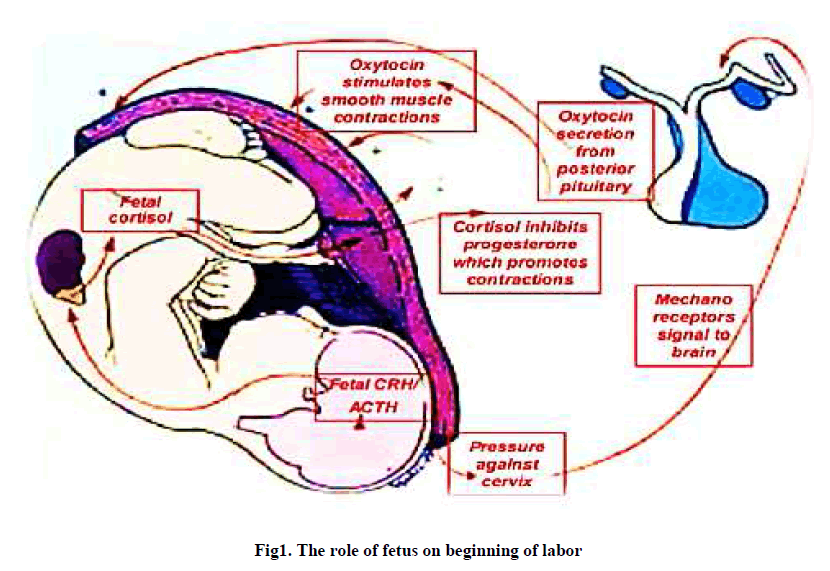
Effigy one: The role of fetus on beginning of labor
Pathways to parturition: this section was indicated in Effigy 2.
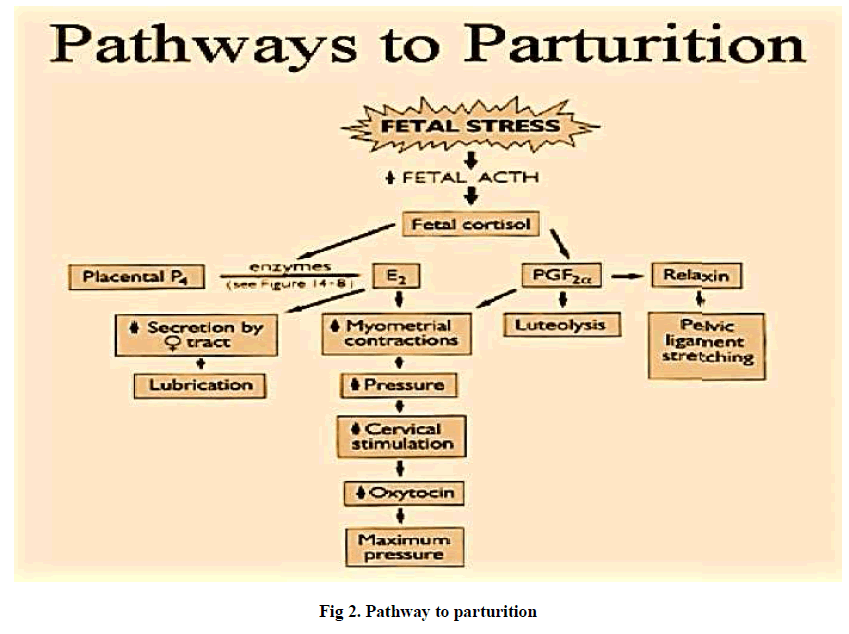
Figure 2: Pathway to parturition
Interaction betwixt: Prostaglandins, Cytokines and Oxytocin
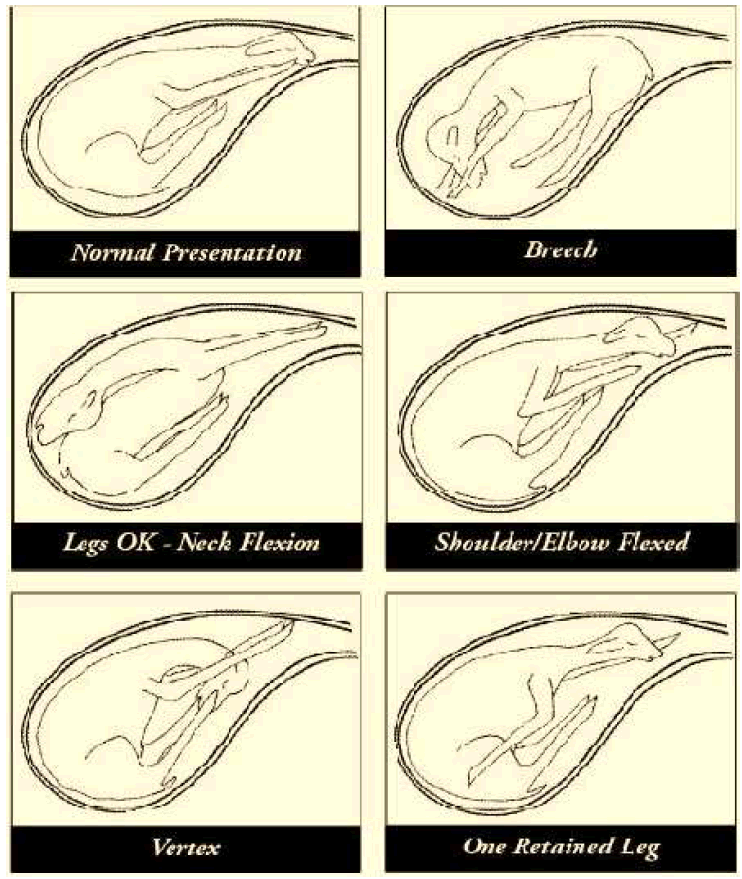
Observations propose that prostaglandins are positive regulators of oxytocin receptor expression, that the uterotonic action of prostaglandins depends partly on oxytocin action, and that prostaglandins, but not oxytocin, are straight involved in the initiation of labor and the role of cytokines is in straight relation on performance of PG. The maximum number of studies on parturition processes has been conducted on sheep. Progesterone production in the significant sheep is derived from the corpus luteum during the offset l days of pregnancy [5] but there is a gradual decline in ovarian progesterone secretion thereafter [4,6]. Thus ovariectomy later on day 50 does not cause abortion because placental progesterone is adequate to maintain pregnancy [6]. All the same, in the caprine animal and cow the corpus luteum is the major source of progesterone and its removal would initiate abortion throughout pregnancy at least in the goat although the placenta also produces some progesterone. The normal nativity presentation in uniparous animals is the anterior longitudinal presentation, dorso-sacral position with the caput resting on the metacarpal bones and knees of the extended forelegs. Birth can occur without assistance if the fetus is in posterior longitudinal presentation dorsosacral position and both hind limbs are extended. Unless, the fetus is pocket-sized most other presentation, position and postures result in dystocia. The transverse presentation can occur in the mare, in which the fetus develops in both uterine horns, rather than in the body of uterus and one uterine horn. Transverse presentations are rare in ruminants, and the small animals.
Following parturition the dam should exist allowed to lick and nurse her young one. Undue excitement should be avoided. Some animals have a strong maternal instinct and frequently object to shifting of their new born and this should therefore be done slowly. The roughage fed should be of good quality.
Dystocias (Hard births)
Dystocia may also exist acquired by maternal reproductive issues such as infection, poor nutrition or obesity where backlog fat in the nascency culvert reduces the area for the fetus to pass through.
Retained Placenta
The placental membranes are commonly expelled within two to eight hours subsequently birth. Occasionally, however, they fail to separate from the uterus. If non treated, this condition may pose a wellness threat to the moo-cow and cause bug in rebreeding. The reason for retained placentas is not known, merely high incidence may betoken a affliction problem. They too ordinarily accompany difficult births, multiple births, short gestations and bull calf births.
Enquiry has shown that transmission removal of retained placentas will decrease fertility. The recommended handling is to wait for almost 48 hours after birth and and then requite injectable antibiotics along with uterine boluses or uterine infusions. Discover the cow closely for swelling of the vulva or signs of illness.
Decision
Parturition is the almost important consequence of an animal's life. For livestock producers, it is a cardinal upshot that tin either atomic number 82 to economic gains, or to a loss should problems occur. By understanding how parturition occurs, information technology is easier for livestock breeders to know when a problem occurs and what to practise if an animal needs assistance. Although a large emphasis in this paper is placed on giving assistance at birth, it is not to be implied that every animal volition need assistance with every birth. It is not uncommon for an animal to give nativity to healthy offspring without whatever man intervention.
References
- Asgari safdar, A.H., Daghigh Kia, H., Farhadi, R. Int J Adv Biol Biom Res. 2013, ane(3):214-221.
- Fuchs, AR. CRC Press, Boca Raton, Florida.1986, p. 163.
- Fuchs, AR, Fuchs, F. A review. Br J Obstet Gynaecol. 1984, 91:948.
- Garfield, RE, Kannan, MS, Daniel, EE. Am J Physiol. 1980, 238:C81.
- Huber, A, Hudelist, One thousand, Czerwenka, G, Obstet Gynecol. 2005, 105:91.
- Jenkin G, Young IR. Anim Reprod Sci. 2004. 82 -85: 567- 81.
- Keirse, MJNC. Leiden University Press, Leiden, 1979, p. 101.
- Liggins, GC. N Engl J Med. 1993, 328:1509.
- MacLennan, AH, Nicolson, R, Green, RC. Equine Vet J Suppl. 1997, 83.
- Novy, MJ, Walsh, SW. Am J Obstet Gynecol. 1983, 145:920.
- Pitera, AE, Smith, GC, Wentworth, RA, Nathanielsz, PW. Am J Obstet Gynecol. 1998, 179:492.
- Potestio, FA, Zakar, T, Olson, DM. J Clin Endocrinol Metab. 1988, 67:1205.
- Roche JF. Anim Reprod Sci. 2006, 96: 282 -96.
- Spitz, IM, Bardin, CW. Northward Engl J Med. 1993, 329:404.
- Thorburn, GD, Challis, JRG, Robinson, JS. Plenum Press, New York. 1977, p. 653.
- Zeeman, GG, Khan-Dawood, FS, Dawood, MY. Obstet Gynecol. 1997, 89:873.
Source: https://www.primescholars.com/articles/parturition-mechanisms-in-ruminants-a-complete-overview-91722.html
Posted by: sabalagole1969.blogspot.com
0 Response to "How Many Stages Do Female Animals Experience During Parturition?"
Post a Comment