

How Do Animals And Plant Colaborate In The Tundra Do Animals Depend On Plants
Animals of the Tundra
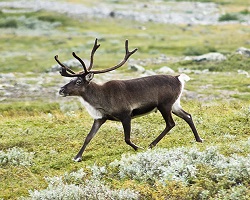
Animals of the tundra, like this caribou, are well adapted to the common cold and dry weather. Click for more detail.
Could yous handle always living in the common cold? Some animals can. Animals of all sizes take adjusted to harsh atmospheric condition conditions and long winters of the tundra.
Many animals accept shorter legs and ears to minimize exposing their skin to the common cold. Some are also well adapted to living high upwards in the mountains. For example, mammals at high elevation are able to use oxygen more efficiently.
Minor creatures, such equally ground squirrels, can seek refuge in vegetation just because it's usually sparse and low, it may expose them to predators. To avoid danger, some species have evolved to be fast runners or to be camouflaged.
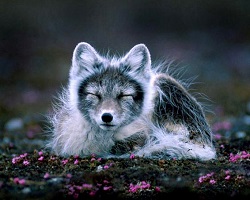
The mixed fur colors of this chill fox show the white winter coat giving manner to the dark summertime glaze. Click for more than item.
Between summer and winter, the grayish-brown fur of snowshoe hare, arctic fox, and others like them blends into white hairs in training for winter cover-up.
Sometimes casualty animals feed at dark to avoid being eaten. They may also reproduce a lot since non all young will survive to adulthood.
Fatty = Energy?
Another fundamental to an animal's survival in the tundra is knowing when to swallow and when to sleep in order to save free energy. Many animals in the tundra hide during the long, cold winter months.
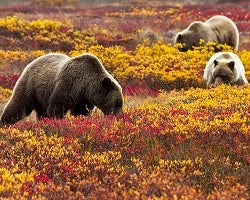
Grizzly bears make certain to become plenty food during the warm seasons on the tundra then they can hibernate through the colder winter months. Image by Albert Herring.
Hibernation is a period of residue lasting several months. During this time, animals stay hidden in dens. Their metabolisms lower into a fallow state, then less energy is required for their bodies to perform the necessary functions. For that free energy, they rely on stores of fat they congenital upward over the summertime.
Tundra animals have other strategies to keep warm too. It helps to have a lot of fur and fat. Later on all, the colder it is, the more than energy it takes for a mammal to maintain a stable body temperature to live.
Merely similar in other biomes, in the tundra, different types of animals get energy from different types of foods. Carnivores are at the top of the food web because they are meat eaters.
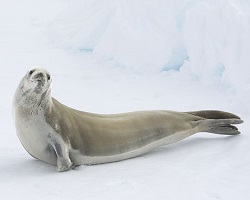
This crabeater seal lives on the coast of Antarctica. It tin can shop fat hands, building a thick blubber to protect information technology from the cold. Image by François Guerraz.
Carnivorous mammals such equally wolves and seals prey on smaller animals to survive while herbivorous mammals merely consume establish-based foods. Animals that eat both other animals and plants are called omnivores.
Lemmings, voles, caribou, arctic hares and squirrels are examples of tundra herbivores at the bottom of the food web. They often accept a potent sense of smell to help them find nutrient underneath the snowfall.
Timing is Everything
Summer melts away the snow, allowing shallow wetlands to form. In the available pools of water, insects breed and attract birds. This explains why animals are most agile in the short summertime. They forage heavily on the plentiful insects and flowers that are in bloom earlier they are forced to hide or migrate to a warmer place for winter. Luckily, during the long-lighted days of summer, there is more than time in each twenty-four hour period to hunt for food.
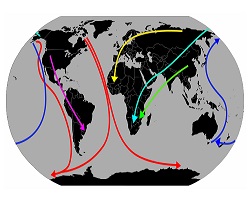
This map shows migration routes taken past several birds, including some that alive in the tundra. Click for more particular.
Summer is for mating, also. Everything from insects, similar mosquitoes, flies, moths, grasshoppers, blackflies and arctic bumble bees, to larger animals take advantage. It turns into a race against time.
Migratory birds such as falcons, loons, sandpipers, terns and snow birds must successfully produce young during the short summertime. If they don't, there is not plenty time to start over with a 2nd nest.
Even given constraints similar these, a lot of animals call the tundra home for at least part of the year. Equally the seasons change, then exercise the species establish in the tundra.
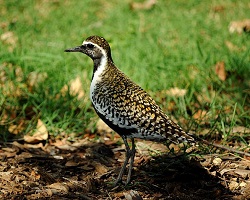
Pacific golden plover spend part of the year in the Alaskan tundra, and part in South America. Image by Daniel Ramirez.
Young plover, a kind of bird, are abandoned on the tundra in Alaska and have to make their mode back to Argentina in Due south America on their own. The adult parents get out earlier, maybe to allow more food for the immature.
Stories like the plovers' are normal for species that spend part of the time in the tundra.
Insect Anti-Freeze
Motion picture holding an insect in your hand and how tiny it looks compared to you lot and everything else. Fifty-fifty small insects live in the tundra. Just how do they survive in beneath-freezing temperatures? For some, the reply is antifreeze.
If yous've heard of antifreeze, information technology was probably from someone with a machine. In cars, antifreeze is a manmade (and very unsafe) chemical mixture that allows all the water-based liquids to operate in a wide range of low and high temperatures.
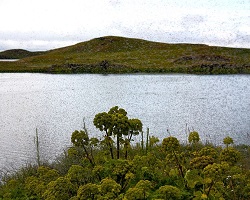
All the tiny dots in this picture are mosquitoes. But how do mosquitoes live in the cold conditions of the tundra? Click for more particular.
Merely like it'due south important for a machine to function, antifreeze in tundra insects is disquisitional for life. Insect antifreeze is a naturally occurring protein that lowers the freezing bespeak of water in insect bodies.
The protein's structure also lets information technology attach to water ice crystals to prevent more from forming. Non only practice insects benefit from this adaptation, simply arctic fish do likewise.
The cold tin affect insects in other ways, as some insects mature very slowly, perhaps taking x to 15 years to pass through all their larval stages. This slow growth occurs because they can merely get a little nutrient each short summertime. No matter the size of the animal, life in the tundra can be tough.
Images via Wikimedia commons. Woolly bear image via IronChris.
Source: https://askabiologist.asu.edu/animals-tundra
Posted by: sabalagole1969.blogspot.com
0 Response to "How Do Animals And Plant Colaborate In The Tundra Do Animals Depend On Plants"
Post a Comment